

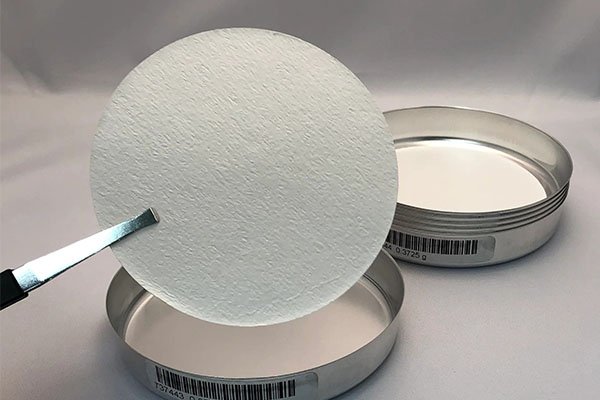
Binderless Glass Microfiber Filters have become essential in many industries. They offer high flow rates, capture exceptionally small particles, and handle high particulate concentrations efficiently[^1].
Binderless glass microfiber filters are most commonly used in applications like air sampling, wastewater analysis, and environmental monitoring[^2]. Their borosilicate glass construction ensures high particle retention and chemical resistance, making them ideal for demanding filtration tasks.
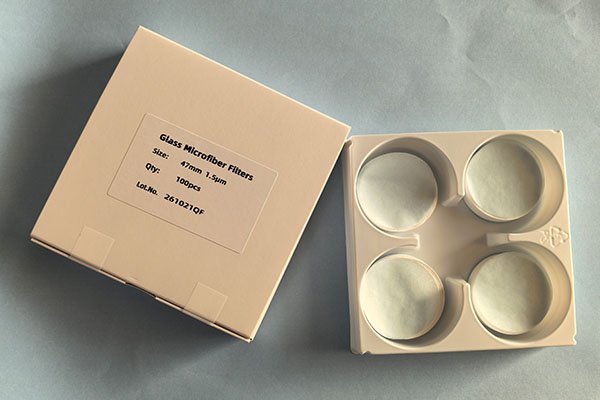
These filters have unique qualities that make them indispensable for laboratories and industries. Their high load capacity and smooth fiber structure allow efficient filtration without binders, ensuring sample purity and reliability[^3].
What are Binderless Glass Microfiber Filters?
Binderless filters are made purely from borosilicate glass fibers[^4], offering smooth and uniform structure. This results in high flow rates and exceptional retention of small particles, even under heavy particulate loads.
Binderless Glass Microfiber Filters are ideal for applications requiring high particulate retention without contamination. They suit air samplers, environmental tests, and other precise filtration needs, offering reliable and stable performance.
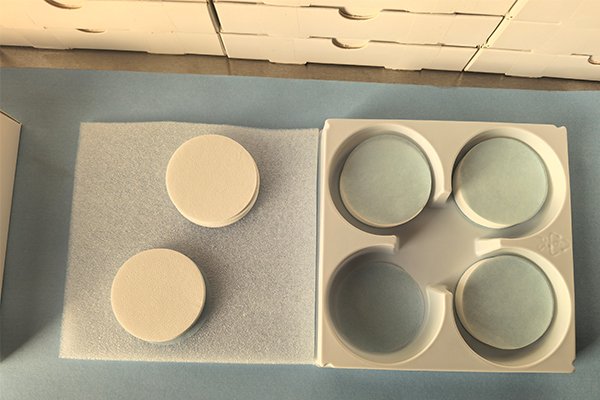
For example, HuaEnv produces binderless glass microfiber filters with grades like GF/A, GF/C, and EPM2000, which match international standards. Their precision manufacturing ensures consistent results across varied applications.
Dive Deeper: Why Choose Binderless Glass Microfiber Filters?
When selecting a filter, understanding its characteristics is essential. Binderless glass microfiber filters excel in areas like air sampling and particle retention, thanks to their unique composition.
| Feature | Details |
|---|---|
| Material | 100% borosilicate glass fibers |
| Pore Size | Typically 0.3-1.5 µm[^5] |
| Applications | Air sampling, wastewater analysis, and more |
| Advantages | High flow rates, effective filtration, no binders |
These filters are used in monitoring air quality, analyzing particulate matter, and ensuring sample purity in laboratories. Their unique design allows them to capture everything from small particles to gelatinous substances effectively.
How Do Binderless Filters Compare to Others?
Binderless filters stand out due to their unique properties. Unlike filters with binders, they eliminate contamination risk[^6], making them ideal for sensitive applications.
Binderless filters use no adhesives or binders. This eliminates potential contamination, which is critical for analytical applications. Whether for air monitoring or demanding lab tests, their reliability is unmatched.
Dive Deeper: Comparing Binderless to Other Filters
Binderless filters excel in purity and efficiency. Here's how they compare with other common filters:
| Filter Type | Advantages | Disadvantages |
|---|---|---|
| Binderless Glass Filters | High purity, no contamination | May be costlier than basic filters |
| Cellulose Filters | Cost-effective, disposable | Lower flow rates, limited purity |
| PTFE Membranes | High chemical resistance | Limited particulate retention |
Binderless glass microfiber filters are ideal for applications demanding high purity and efficiency. For highly sensitive tasks like environmental monitoring, they provide the best results.
Where Are Binderless Glass Microfiber Filters Used?
Binderless filters are essential in several industries. They are applied in air sampling, water quality testing, and life sciences due to their purity and efficiency.
Binderless glass microfiber filters are used in areas like air sampling for PM2.5, TSP[^7] monitoring, wastewater filtration, and soil sample testing. Their reliability ensures accurate results every time.

Dive Deeper: Key Industries and Applications
Here are some of the most common fields and uses for binderless glass microfiber filters:
| Industry | Application | Filter Grade |
|---|---|---|
| Environmental Monitoring | Air sampling for PM2.5, TSP | GF/A, GF/F |
| Wastewater Analysis | Heavy particulate filtration | GF/B, 934-AH |
| Life Sciences | Sample preparation, particle retention | GF/C, GF/F |
| Food & Beverage | Fat analysis using Soxhlet extraction[^8] | Cellulose thimble |
These filters are versatile. For example, HuaEnv assisted a Middle Eastern client looking for filters with specific pore size requirements for air samplers. After evaluating their needs, we recommended GF/A and EPM2000 grades. We even offered free samples for testing, ensuring client satisfaction.
Conclusion
Binderless glass microfiber filters are invaluable for laboratories and industries. Their high purity, efficiency, and adaptability make them the ideal choice for demanding filtration applications.
[^1]: "Chemical Modification with Surface-Active Treatment - PMC", https://pmc.ncbi.nlm.nih.gov/articles/PMC11174125/. Published filtration studies and standard-method descriptions report that glass-fiber media combine relatively high permeability with fine particulate retention and are used where filter loading by solids is substantial. Evidence role: general_support; source type: paper. Supports: Binderless glass microfiber filters offer high flow rates, retain very small particles, and perform well with high particulate loads.. Scope note: This supports the performance class generally; individual flow rate, retention, and loading capacity depend on filter grade, diameter, and test conditions.
[^2]: "Selection, Preparation and Extraction of Filter Material", https://www.epa.gov/sites/default/files/2019-11/documents/mthd-3-1.pdf. Government and standard-method documents identify glass-fiber filters as filter media used in ambient particulate sampling and in water or wastewater suspended-solids analysis. Evidence role: case_reference; source type: government. Supports: Binderless glass microfiber filters are used in air sampling, wastewater analysis, and environmental monitoring.. Scope note: The sources can verify recognized uses, but not necessarily that these are the most common uses across all industries.
[^3]: "Impact of Extractables/Leachables from Filter Materials on ...", https://pubmed.ncbi.nlm.nih.gov/36002610/. Analytical-filtration references note that filter media constituents and extractables can affect sample blanks, supporting the rationale for binder-free media in contamination-sensitive work. Evidence role: mechanism; source type: paper. Supports: Using binderless filter media can reduce potential contamination from binders in analytical samples.. Scope note: The evidence supports reduced binder-derived contamination risk, not absolute sample purity or reliability under all handling conditions. [^4]: "Specialty Glass Microfiber", https://iwtremont.com/specialty-glass-microfiber/. Technical descriptions of binderless glass-fiber filtration media define the media as borosilicate glass microfibers without added organic binders. Evidence role: definition; source type: institution. Supports: Binderless glass microfiber filters are composed of borosilicate glass fibers without added binder.. Scope note: This verifies the material definition of the filter category rather than the composition of any specific manufacturer’s product.
[^5]: "Filtration Characteristics of Glass Fiber Filter at Elevated ...", https://nepis.epa.gov/Exe/ZyPURL.cgi?Dockey=91015XO6.TXT. Published analytical methods and filter-grade descriptions commonly report nominal retentions for glass-fiber grades in the submicron-to-low-micron range, such as about 0.7 µm for GF/F and about 1.2 µm for GF/C. Evidence role: statistic; source type: paper. Supports: Glass microfiber filter grades often have nominal retention ratings in approximately the 0.3–1.5 µm range.. Scope note: The exact range is grade- and manufacturer-dependent, and nominal retention is not identical to a membrane pore-size rating.
[^6]: "Analysis and evaluation of filter cartridge extractables for ...", https://pubmed.ncbi.nlm.nih.gov/9038087/. Sources on analytical filtration and filter-media extractables indicate that binders can contribute potential contaminants or background residues, so binder-free media reduce one contamination pathway. Evidence role: mechanism; source type: paper. Supports: Binderless filters reduce potential contamination associated with binder materials.. Scope note: The support should be phrased as reducing binder-related contamination risk; it does not establish elimination of all contamination risks.
[^7]: "Selection, Preparation and Extraction of Filter Material", https://www.epa.gov/sites/default/files/2019-11/documents/mthd-3-1.pdf. Ambient air-monitoring methods and regulatory guidance specify filter-based collection for particulate matter, including PM2.5 and total suspended particulate sampling, and include glass-fiber or similar filter media in relevant methods. Evidence role: case_reference; source type: government. Supports: Glass microfiber filters are used in air-sampling workflows for PM2.5 and total suspended particulates.. Scope note: The citation can support the application area, but the accepted filter material depends on the specific method, analyte, and jurisdiction.
[^8]: "Determination of Fat", https://www.fsis.usda.gov/sites/default/files/media_file/2020-11/CLG_FAT_03.pdf. Official food-analysis methods describe Soxhlet extraction as a gravimetric method for determining fat or lipid content, often using extraction thimbles to contain the sample during solvent extraction. Evidence role: case_reference; source type: institution. Supports: Soxhlet extraction is a recognized method for fat analysis, commonly using extraction thimbles.. Scope note: This supports the Soxhlet fat-analysis application and thimble use, but it does not show that binderless glass microfiber filters are the primary medium for that application.


