

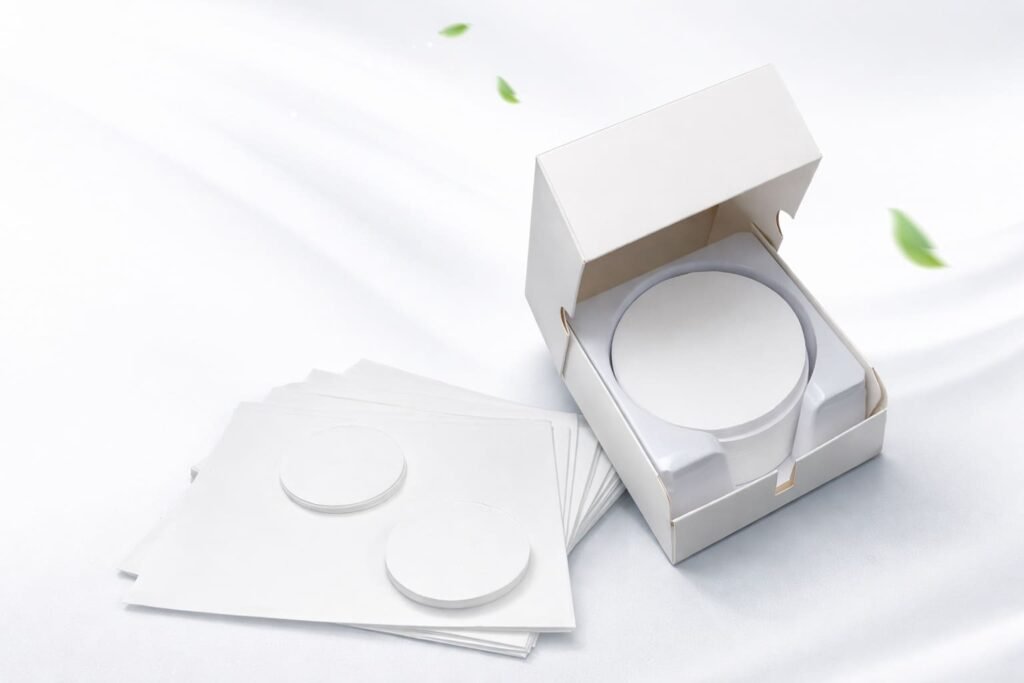
The choice of the right filter can make or break experimental results. Whether you're monitoring water pollution or filtering bacterial culture, precision matters.
Whatman Grade 934-AH binder-free borosilicate glass microfiber filters[^1] are used for applications requiring high retention efficiency, high flow rates, and precise particle capture, such as water quality monitoring and laboratory filtration.
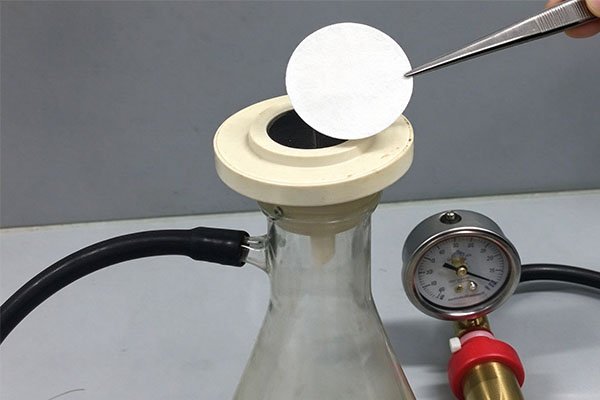
The smooth surface and high-grade borosilicate material of these filters ensure consistent and reliable filtration, while their ability to withstand temperatures up to 550°C makes them versatile across various industries.
Why is high retention efficiency important?
Filtration efficiency is often overlooked but is critical for accurate sample analysis in research and environmental monitoring.
High retention efficiency enables Grade 934-AH filters to capture particles as small as 1.5 µm[^2] while maintaining smooth flow, ensuring precise results in total suspended solids (TSS) testing[^3].
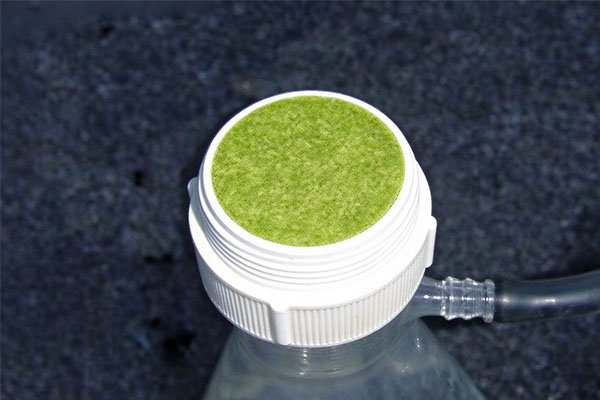
These filters not only capture microscopic particles but also offer low fiber shedding, ensuring minimal contamination[^4] during filtration. This makes them ideal for laboratory testing where purity and accuracy are a priority.
Applications of High Retention Efficiency:
| Application | Benefits | Filter Features |
|---|---|---|
| Total Suspended Solids Testing (TSS) | Precise particle capture | Nominal retention of 1.5 µm |
| Water Quality Monitoring | Reliable measurements | Binder-free glass microfiber material |
| Bacterial Culture Filtration | Prevent contamination | Smooth surface, low fiber shedding |
What makes their high loading capacity unique?
Handling turbid solutions can be challenging, especially when dealing with large volumes or volatile compounds.
The high loading capacity of Grade 934-AH filters[^5] allows efficient filtration of suspended solids, making them ideal for liquid filtration and gravimetric analysis.
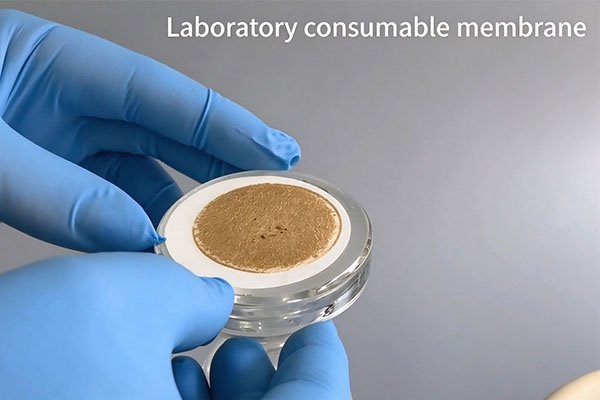
Thanks to their optimized design, these filters can process dense solutions without clogging, ensuring smooth operation for consistent lab workflows. This feature is particularly useful in environmental monitoring, where samples may contain diverse suspended materials.
Dive deeper into High Loading Capacity:
| Use Case | Challenge | 934-AH Solution |
|---|---|---|
| Turbid Solution Filtration | Risk of clogging | High loading capacity avoids blockages |
| Gravimetric Analysis | Accuracy in mass measurements | Smooth surface ensures precise recovery |
| High-Volume Filtration | Slow processing speeds | High flow rates maintain efficiency |
How does temperature resistance expand usability?
Filtration often involves extreme conditions, whether it's high heat or exposure to volatile compounds.
Grade 934-AH filters can withstand temperatures up to 550°C, making them suitable for high-temperature applications like air pollution monitoring and volatile suspended solid (VSS) testing.
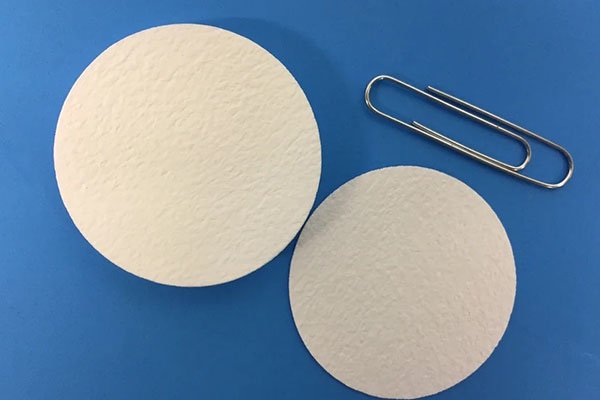
Their durability ensures they can handle rigorous experimental conditions without compromising filtration quality. This feature is a significant advantage for labs dealing with temperature-sensitive processes.
Breaking down Temperature Resistance:
| Application | Temperature Challenge | 934-AH Benefit |
|---|---|---|
| Air Pollution Monitoring | Exposure to heat and chemicals | Withstands up to 550°C |
| Volatile Suspended Solids Testing | Requires stable filters under heat | Durable borosilicate material |
| Environmental Sampling | Extreme outdoor conditions | Reliable performance |
How does HuaEnv compare to Whatman?
For years, Whatman has dominated the international market for glass microfiber filters. But HuaEnv offers a competitive alternative that challenges the status quo.
HuaEnv's glass microfiber filters are an OEM solution with customizable sizes, precise cutting tolerance, and cost-effective pricing[^6], rivaling Whatman’s products like the Grade 934-AH.
HuaEnv's manufacturing capabilities allow them to produce a wide range of filters, including GF/A, GF/B, GF/C, GF/D, GF/F, and 934-AH, offering flexibility for laboratories seeking economical yet high-performance alternatives.
Why Choose HuaEnv?
| Feature | Whatman Grade 934-AH | HuaEnv |
|---|---|---|
| Material Quality | Premium borosilicate glass | Comparable quality, ISO-certified |
| Cost Effectiveness | High price point | Affordable and flexible pricing |
| Customization Options | Limited | Fully customizable sizes |
Conclusion
Whatman Grade 934-AH filters stand out for their high retention efficiency, loading capacity, and temperature resistance, making them essential for various laboratory applications. HuaEnv provides a competitive alternative, delivering equivalent performance at a more accessible price.
[^1]: "Whatman filtration Product guide", https://macro.lsu.edu/HowTo/Whatman-filtration-product-guide.pdf. A manufacturer technical specification identifies Whatman Grade 934-AH as a binder-free borosilicate glass microfiber filter and lists typical laboratory and environmental filtration uses. Evidence role: definition; source type: other. Supports: Whatman Grade 934-AH filters are binder-free borosilicate glass microfiber filters used in laboratory and environmental filtration.. Scope note: This supports the product description but relies on manufacturer documentation rather than independent performance testing.
[^2]: "Whatman glass microfiber filters, Grade 934-AH circles, diam ...", https://www.sigmaaldrich.com/US/en/product/aldrich/wha1827105. Product specifications list Grade 934-AH with a nominal particle retention of 1.5 µm, supporting the stated capture rating. Evidence role: statistic; source type: other. Supports: Grade 934-AH filters have a nominal particle retention of 1.5 µm.. Scope note: Nominal retention is not equivalent to an absolute pore-size cutoff and may vary with test conditions and particle type.
[^3]: "SOP 227-Total Suspended Solids and ...", https://pubs.usgs.gov/sir/2015/5006/downloads/sir2015-5006_appendix1/2010%20Standard%20Operating%20Procedures/SOP%20227-Total%20Suspended%20Solids%20and%20Total%20Suspended%20Volatile%20Solids.pdf. EPA and Standard Methods procedures for total suspended solids determine TSS by filtering a measured sample through a glass-fiber filter and weighing the dried retained residue, supporting the importance of filter retention and handling for TSS results. Evidence role: mechanism; source type: government. Supports: Filter retention and residue recovery are important to precision in total suspended solids testing.. Scope note: The method evidence supports the analytical principle but does not independently prove that Grade 934-AH always produces more precise results than other compliant filters.
[^4]: "Whatman filtration Product guide", https://macro.lsu.edu/HowTo/Whatman-filtration-product-guide.pdf. Technical literature on binder-free glass microfiber filters describes low extractables or low fiber release as relevant to reducing contamination during filtration. Evidence role: mechanism; source type: other. Supports: Low fiber shedding in glass microfiber filters can reduce contamination risk during filtration.. Scope note: Such evidence may support the material class generally unless the source specifically tests Grade 934-AH fiber shedding.
[^5]: "Whatman filtration Product guide", https://macro.lsu.edu/HowTo/Whatman-filtration-product-guide.pdf. Product specifications describe Grade 934-AH as having high loading capacity, supporting its use for samples containing substantial suspended material. Evidence role: general_support; source type: other. Supports: Grade 934-AH filters have high loading capacity for suspended-solids filtration.. Scope note: The claim is product-specific and is best supported by manufacturer data unless independent comparative loading-capacity tests are available.
[^6]: "Professional Laboratory Filtration Solutions", https://huaenv.com/. Company manufacturing documentation or an independently audited supplier profile may support claims about OEM production, custom sizing, and stated tolerances. Evidence role: case_reference; source type: other. Supports: HuaEnv offers OEM glass microfiber filters with custom sizing and specified cutting tolerances.. Scope note: Supplier documentation can verify offered capabilities, but claims about cost-effectiveness or equivalence to Whatman require independent pricing and performance comparisons.


