


Air quality is crucial for our health and environment. Understanding how to monitor it effectively can make a big difference. Filtration plays a vital role in air testing applications.
Air monitoring filters are essential for the initial step of air quality testing.[^1] They collect representative samples for analysis, ensuring reliable results.[^2]
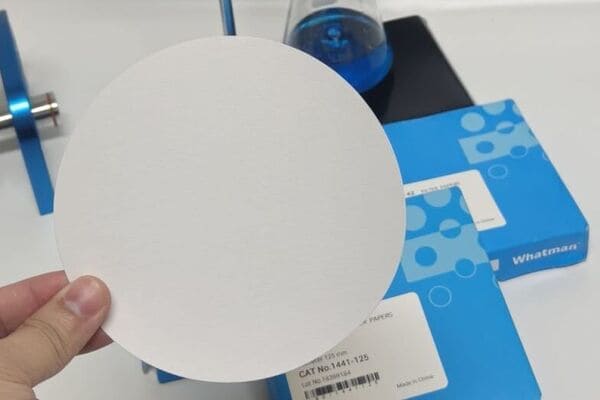
Choosing the right filter is vital. It determines the quality of the air samples collected. Air monitoring involves testing for particulate matter (PM).[^3] This includes small solid particles and liquid droplets. The collected samples are analyzed to assess air quality. Different filters serve various purposes.
LOOP START
What types of air monitoring filters are available?
Air monitoring filters come in several grades, each designed for specific applications. Understanding these options can help you choose the right one for your needs.
There are several types of air monitoring filters, each serving different purposes. Some of the most common filters include Grade GF/A, Grade EPM 2000, PM2.5 membrane filters, and QM-C quartz filter paper.
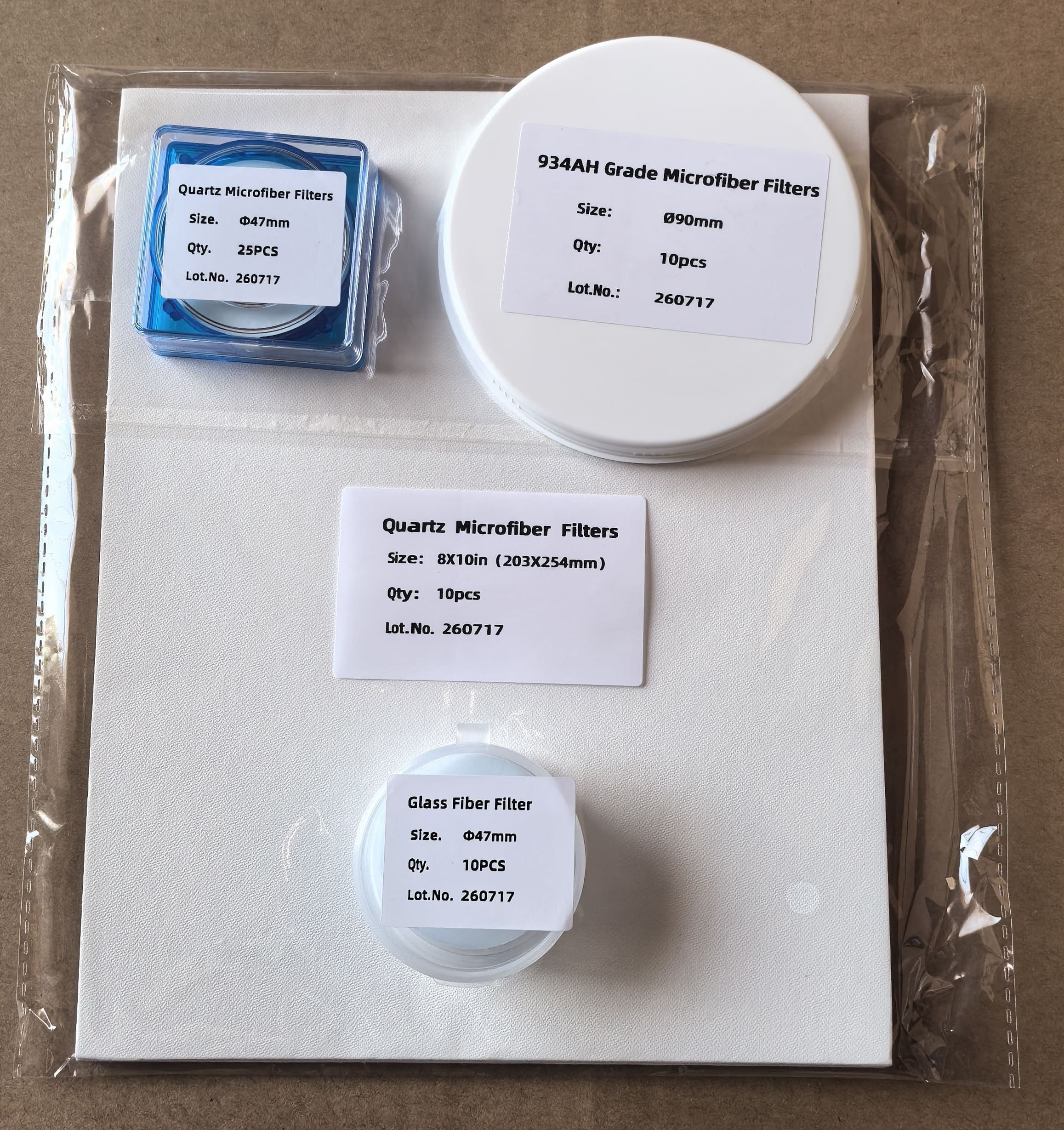
Let's dive deeper into these filters:
-
Grade GF/A Air Sampling Filters: These are glass fiber filters known for high retention and flow rates. They are ideal for gravimetric analysis of particulate matter.
-
Grade EPM 2000 Air Sampling Filters: These filters excel in capturing fine particulate matter. They are suitable for environments with chemically aggressive aerosols.
-
PM2.5 Air Monitoring Membrane Filters: Specifically designed for PM2.5 sampling, these filters help in monitoring small particles that can affect health.
-
QM-C Quartz Filter Paper: This filter is highly resistant to heat and chemicals. It is used for applications requiring high purity and low background interference.
Selecting the appropriate filter depends on the specific requirements of your air monitoring project. Factors such as the nature of the particles, the environment, and the testing method play essential roles in this decision.
LOOP END
How do air monitoring filters improve sample reliability?
Reliable air samples are crucial for accurate results. The right filter can significantly enhance the reliability of your air monitoring data.
Air monitoring filters greatly enhance the reliability of sample collection. They ensure that the samples represent true air quality, leading to more accurate test results.
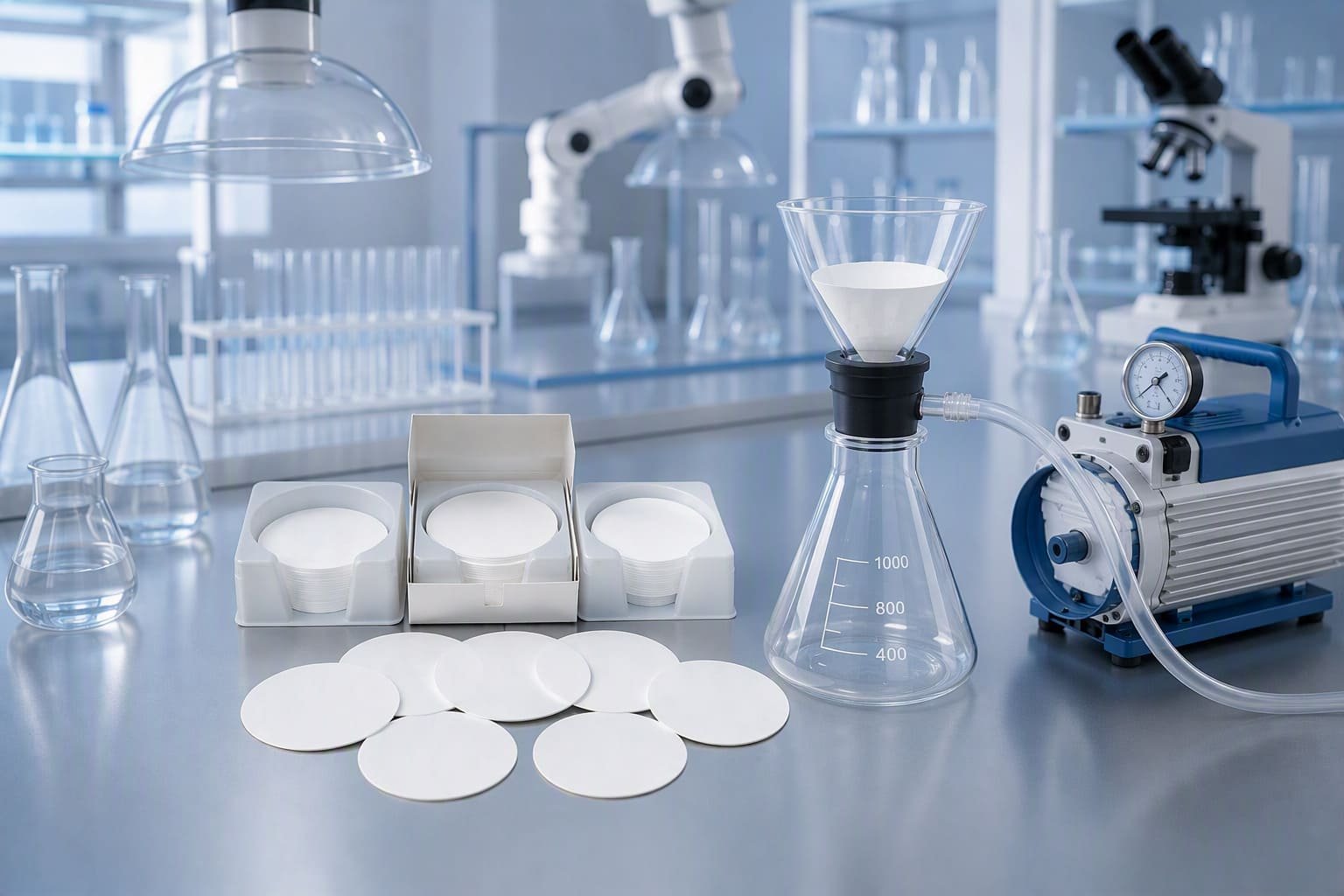
To understand why reliable samples are important, let's look at the following points:
-
Efficiency in Air Quality Testing: Filters facilitate the collection of airborne particulate matter (PM). Technicians can then use gravimetric methods to determine the PM volume and weight in a specific air volume.[^4]
-
Accurate Composition Analysis: After the initial gravimetric assessment, filters enable further analysis.[^5] This helps in identifying the chemical composition of the collected particulate matter.
-
Environmental Adaptability: Using filters that can withstand harsh environments ensures that no contamination occurs during sampling. This is particularly important for ambient air quality monitoring.
-
Flexibility in Applications: Different filters allow for adaptation to various monitoring scenarios. Whether it is industrial emissions or urban air quality, selecting the right filter can lead to more precise and meaningful data.
Choosing the right air monitoring filter not only impacts the quality of the sample collected but also the overall findings from air quality tests. This reliability is crucial for environmental monitoring and public health assessments.
Conclusion
Air monitoring filters are key to collecting reliable air quality samples. Choosing the right one ensures accurate analysis and better environmental assessments.
[^1]: "Method IO-2.3 - Sampling of Ambient Air for PM10 ...", https://www.epa.gov/sites/default/files/2019-11/documents/mthd-2-3.pdf. Regulatory sampling methods for ambient particulate matter specify collection of particles on filter media as a core step before weighing or laboratory analysis, supporting the role of filters in air-quality testing. Evidence role: general_support; source type: government. Supports: Air monitoring filters are essential for the initial step of air quality testing.. Scope note: The source would support filter-based particulate monitoring generally, not every possible air-monitoring application.
[^2]: "Quality Assurance Handbook for Air Pollution ...", https://www.epa.gov/sites/default/files/2020-10/documents/final_handbook_document_1_17.pdf. Standard air-sampling guidance describes the use of validated flow rates, sampling duration, and filter media to obtain particulate samples suitable for reproducible gravimetric or chemical analysis. Evidence role: mechanism; source type: government. Supports: Air monitoring filters collect representative samples for analysis and help ensure reliable results.. Scope note: Such guidance supports the conditions under which samples can be representative; it does not guarantee reliability if sampling design or handling is poor.
[^3]: "Air pollution | In-depth topics | European Environment Agency ...", https://www.eea.europa.eu/en/topics/in-depth/air-pollution. Environmental health agencies identify particulate matter as one of the principal pollutants measured in ambient air-quality monitoring programs. Evidence role: definition; source type: government. Supports: Air monitoring involves testing for particulate matter (PM).. Scope note: Air monitoring can also include gases and other pollutants; the source would support PM as a major component rather than the sole focus of air monitoring.
[^4]: "Gravimetric Analysis of Particulate Matter using Air Samplers ...", https://pmc.ncbi.nlm.nih.gov/articles/PMC4587562/. Federal reference and equivalent methods for particulate matter determine particle mass concentration by weighing conditioned filters before and after sampling and relating the mass gain to the sampled air volume. Evidence role: mechanism; source type: government. Supports: Gravimetric methods use filters and sampled air volume to determine particulate matter concentration.. Scope note: Gravimetric methods determine particulate mass concentration, not particle volume in the geometric sense; the article wording may need refinement.
[^5]: "Chemical Speciation Network - Sample Filter Handling, ...", https://www.epa.gov/amtic/chemical-speciation-network-sample-filter-handling-shipment-and-gravimetric-analysis-summary. Air-quality research and monitoring protocols commonly use collected filter samples for subsequent chemical analyses, including elemental, ionic, carbonaceous, or organic composition measurements. Evidence role: mechanism; source type: research. Supports: Filters used for particulate collection can enable further chemical analysis after gravimetric assessment.. Scope note: The specific analyses possible depend on filter material, sampling artifacts, and laboratory method compatibility.


